Feet Pic Scam Red Flags
Most scams are not sophisticated. They rely on speed, pressure, embarrassment, or a seller's hope that a buyer is serious. Use the table below as a simple filter before you send paid content.
| Scam | Red flag | Safer move |
|---|---|---|
| Proof pics before payment | A buyer asks for free samples, then disappears or reuses them. | Use preview images only, watermark samples when possible, and require platform checkout before delivery. |
| Fake payment screenshots | They send a Cash App, PayPal, Venmo, or bank screenshot instead of a confirmed payment. | Treat screenshots as unverified. Check the actual payment account or use a platform with checkout confirmation. |
| Pending payment unlock | They claim you must send money, gift cards, or content to release a pending payment. | Do not send anything. Real payments do not require the seller to unlock funds for the buyer. |
| Chargeback after delivery | A buyer pays, receives content, then disputes the charge. | Use adult-friendly processors and platforms with clear digital-content, dispute, and refund rules. |
| Move to Telegram, Snapchat, or email | The buyer tries to move payment and delivery away from the platform right away. | Keep negotiation, payment, and delivery in one logged place until trust is established. |
| Verification fee | Someone says you need to pay them to verify, unlock buyers, or become eligible to sell. | Only complete verification through the platform's official flow. Buyers should never handle your verification. |
| Gift cards or crypto pressure | They want Amazon, Apple, Steam, crypto, or another hard-to-recover payment method. | Avoid payment methods that offer no buyer identity, no receipt trail, or no practical dispute process. |
| Custom request boundary push | They keep expanding the request after paying for a smaller order. | Write the exact deliverables, price, deadline, and limits before accepting payment. |
Payment Methods to Treat Carefully
Social DMs plus Cash App/Venmo
Risk: Fast, but easy to spoof and hard to connect to platform delivery rules.
Safer use: Promotion only. Move paid orders to a safer checkout layer.
PayPal for adult digital content
Risk: Policy and dispute risk can be high for adult or custom digital goods.
Safer use: Avoid unless you fully understand the account, content, and dispute risk.
Gift cards
Risk: Often requested by scammers and difficult to verify or recover.
Safer use: Do not use for feet pic sales.
Dedicated marketplace checkout
Risk: Still requires reading the platform rules, fees, and payout timing.
Safer use: Best default for beginners because payment, delivery, and dispute context stay together.
Seller Checklist Before Delivery
- Require payment confirmation before sending final files.
- Keep buyer messages, order details, and delivery records in one place.
- Use watermarked previews instead of sending free custom samples.
- Do not send money to unlock a payment, buyer, payout, or verification step.
- Do not share face, legal name, address, workplace, school, or personal social accounts.
- Write custom-request boundaries before accepting the order.
- Block buyers who rush, threaten, guilt-trip, or refuse platform checkout.
- Compare seller fees, payout timing, refund rules, and verification before choosing a platform.
How Footly Reduces Scam Risk
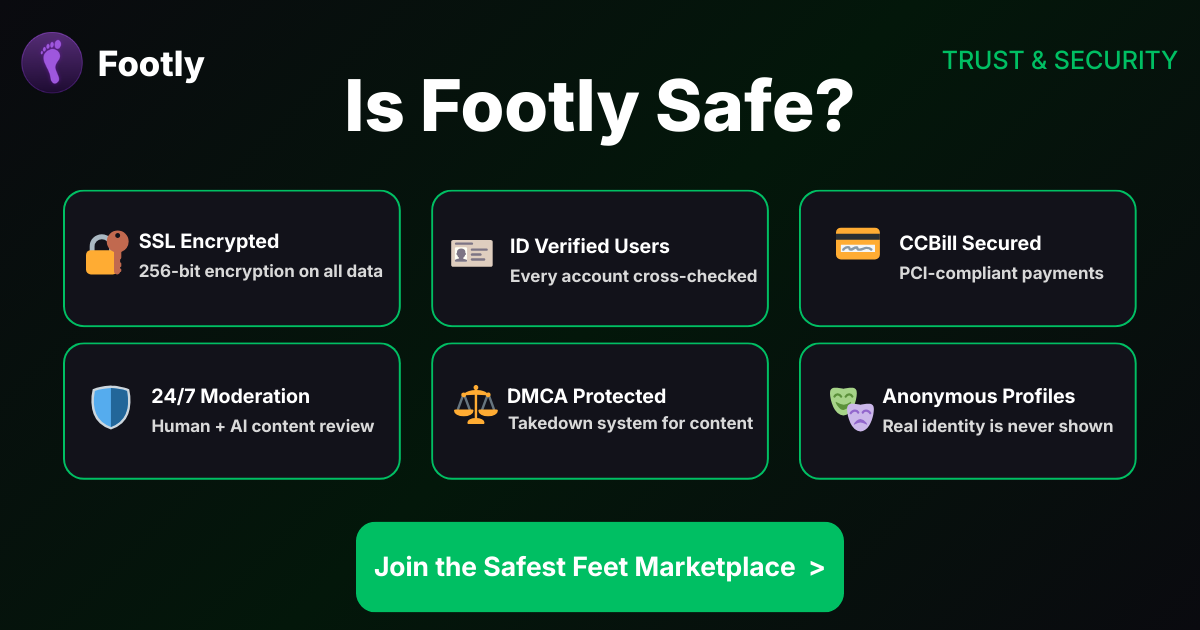
No platform can remove every risk from online selling, but Footly is designed to remove several common failure points from feet-content transactions. Buyers use platform checkout, creators complete verification, orders and messages stay in one environment, and creators can sell subscriptions, message unlocks, pay-per-view, tips, and custom requests without moving buyers to personal payment apps.
What Footly helps with
- Platform checkout instead of payment screenshots
- Creator verification for trust and compliance
- Order context for custom requests and delivery
- The tiered platform fee is the only fee on creator earnings. Footly absorbs buyer-side CCBill processing costs and payout-side ACH/Paxum processing fees.
What sellers still need to do
- Protect personal identity and metadata
- Set boundaries for custom requests
- Ignore buyers asking to move payment off-platform
- Read current fees, payout timing, and refund policies
Bottom Line
If a buyer asks for free proof pics, wants you to trust a payment screenshot, pushes gift cards, or rushes you off-platform, treat it as a scam signal. Slow down, confirm payment in the actual payment system, keep records, and use a marketplace checkout when you do not already have a trusted buyer relationship.
These patterns aren't hypothetical: our data on feet pic scams measured them across 6,263 blocked scam messages — 44% asked the seller to pay a fee first, and almost none named a payment app until the conversation moved off-platform.