The finding
Key findings
Scam attempts target sellers across every platform in this space. This report shows what that activity looks like when a marketplace instruments for it and blocks it before delivery.
Every figure below comes from one frozen snapshot of Footly's production systems. The chart images are available to reuse with attribution under CC BY 4.0; the exact definitions and denominators are documented in the methodology.
- 6,263
- scam messages blocked in roughly four and a half months
- 32.8%
- of all direct messages in the window were intercepted scams
- 2,064
- people targeted, including 2,060 creators
- 126
- sender accounts generated every blocked scam message
Message analysis
How scam messages are structured
Nearly one in three direct messages sent on Footly between March and July 2026 — 6,263 of 19,082 — was a scam attempt intercepted before its target ever saw it. Almost every one was a variation of the same sequence: unsolicited approach, implausibly large offer, off-platform pull, then a request that the seller pay first.
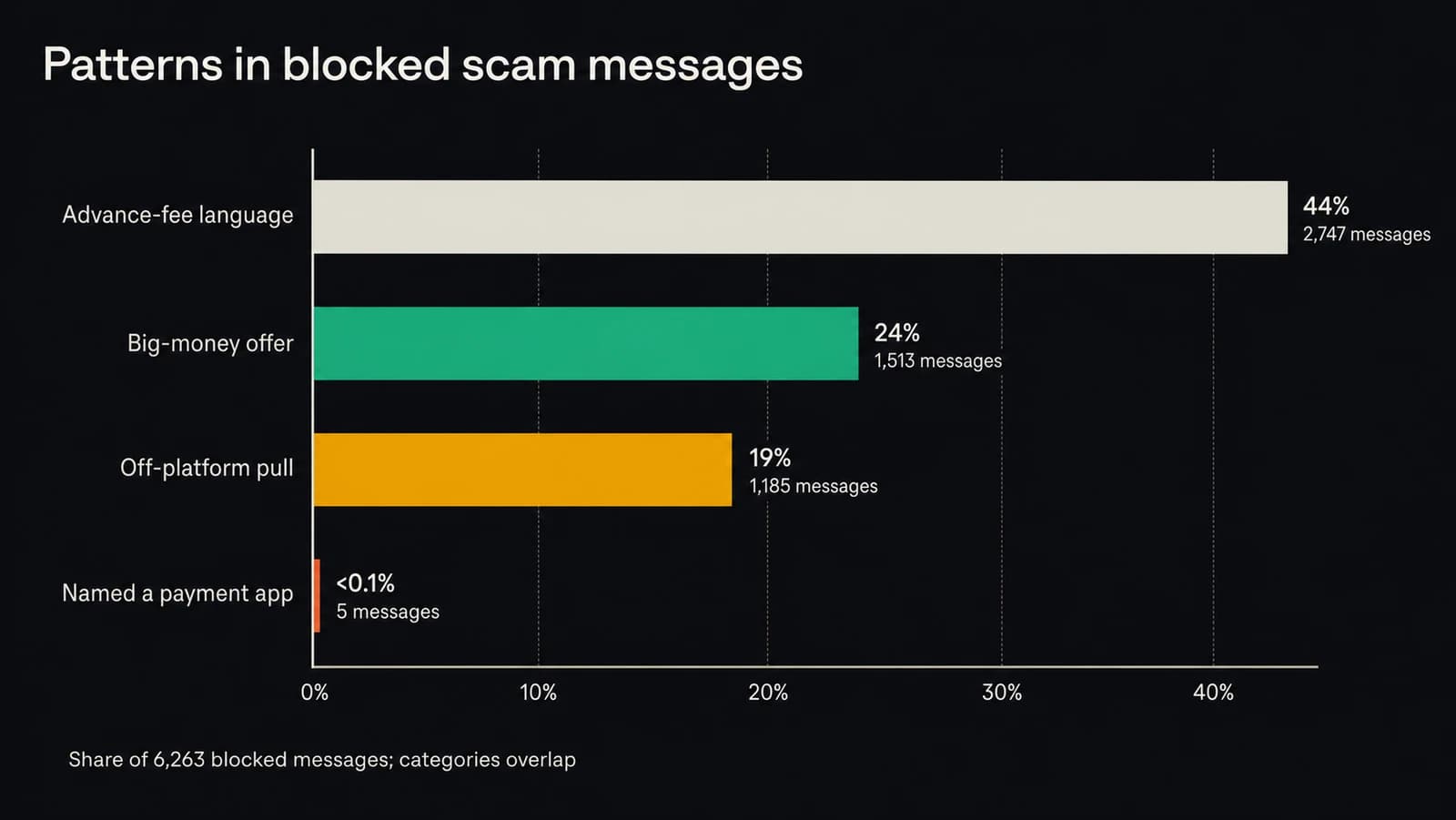
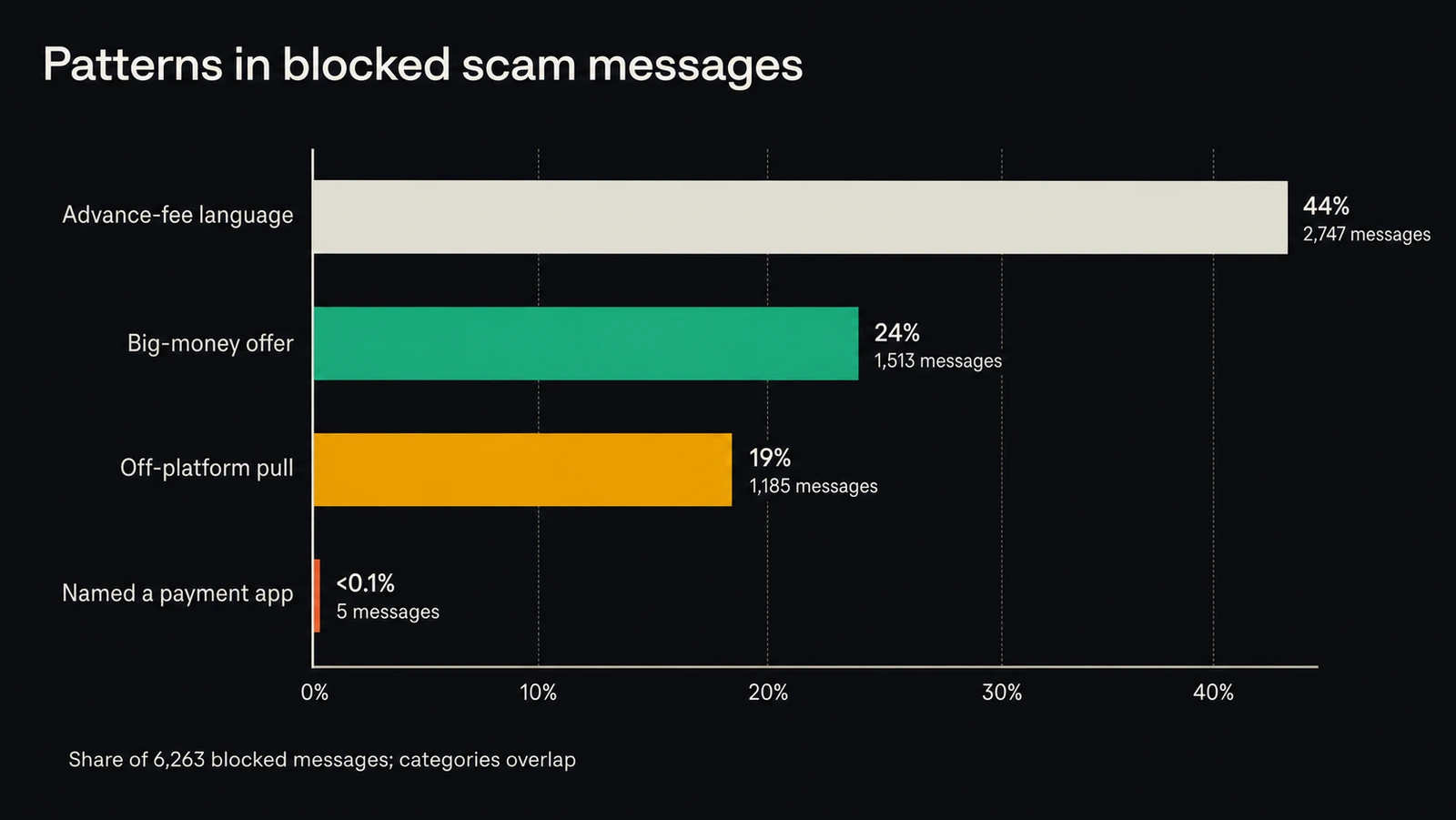
Advance-fee language appeared in 2,747 messages. Another 1,513 dangled a large-sum offer, while 1,185 tried to move the conversation to Telegram, WhatsApp, Snapchat, Instagram, or Kik. Categories overlap because a single message can contain several signals.
Account infrastructure
A small number of accounts drove the volume
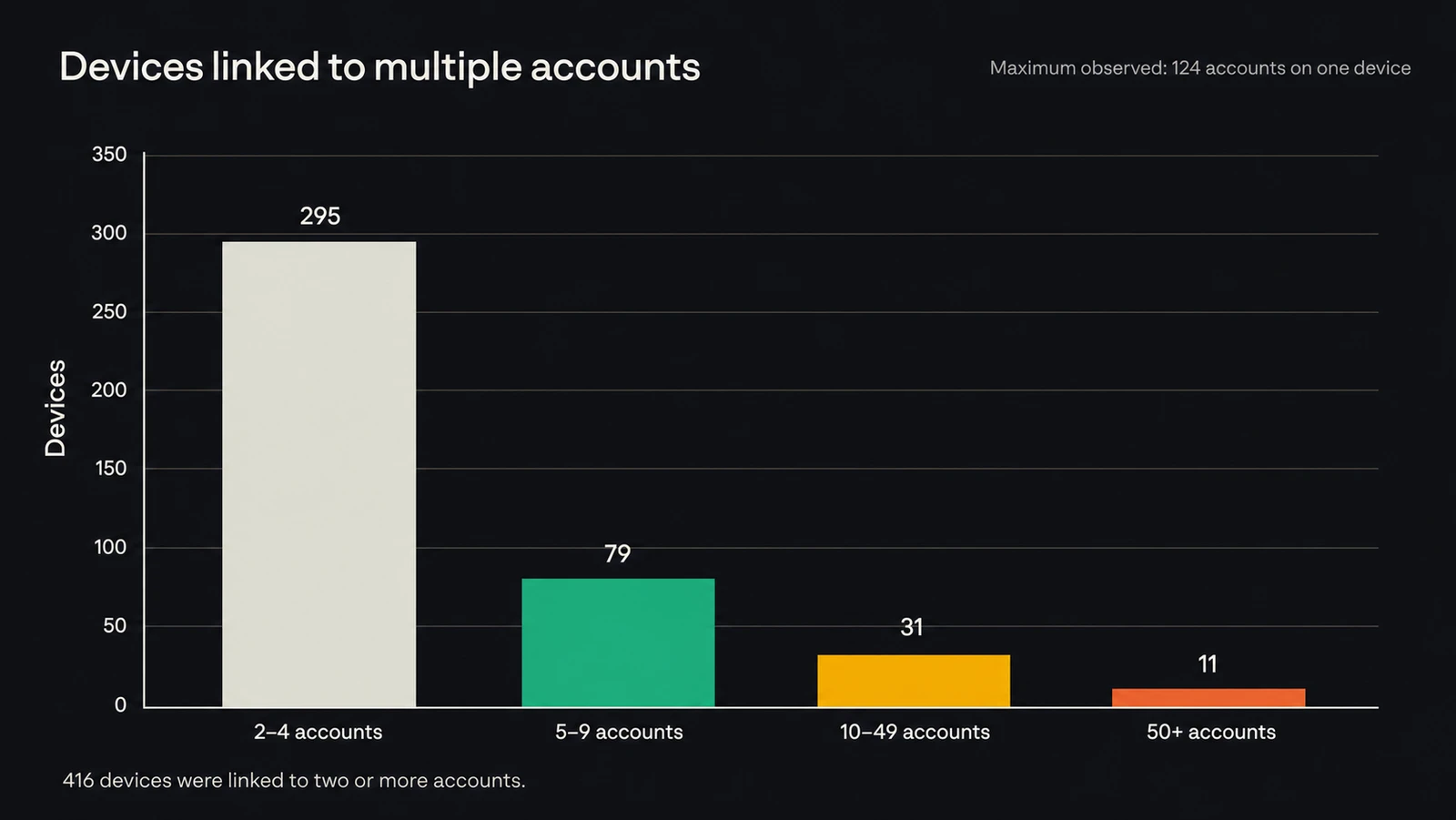
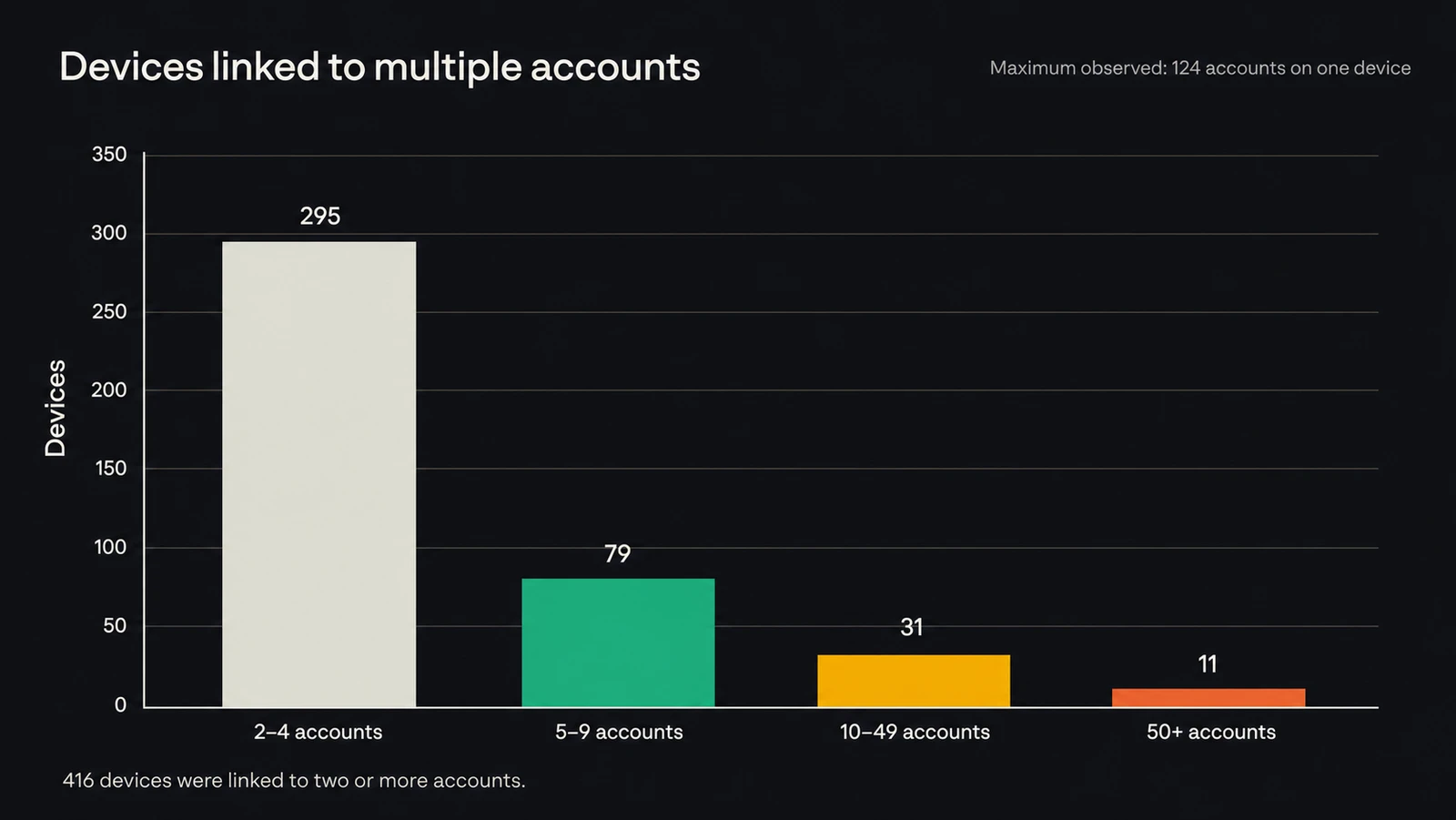
Just 126 accounts sent all 6,263 blocked messages — an average of roughly 50 messages each. Device fingerprinting makes the operating layer visible: 416 of 17,659 observed devices were linked to two or more accounts.
Forty-two devices held ten or more accounts each — 1,493 accounts between them — and one device registered 124 separate accounts. Those numbers look less like shared household hardware and more like account farms.
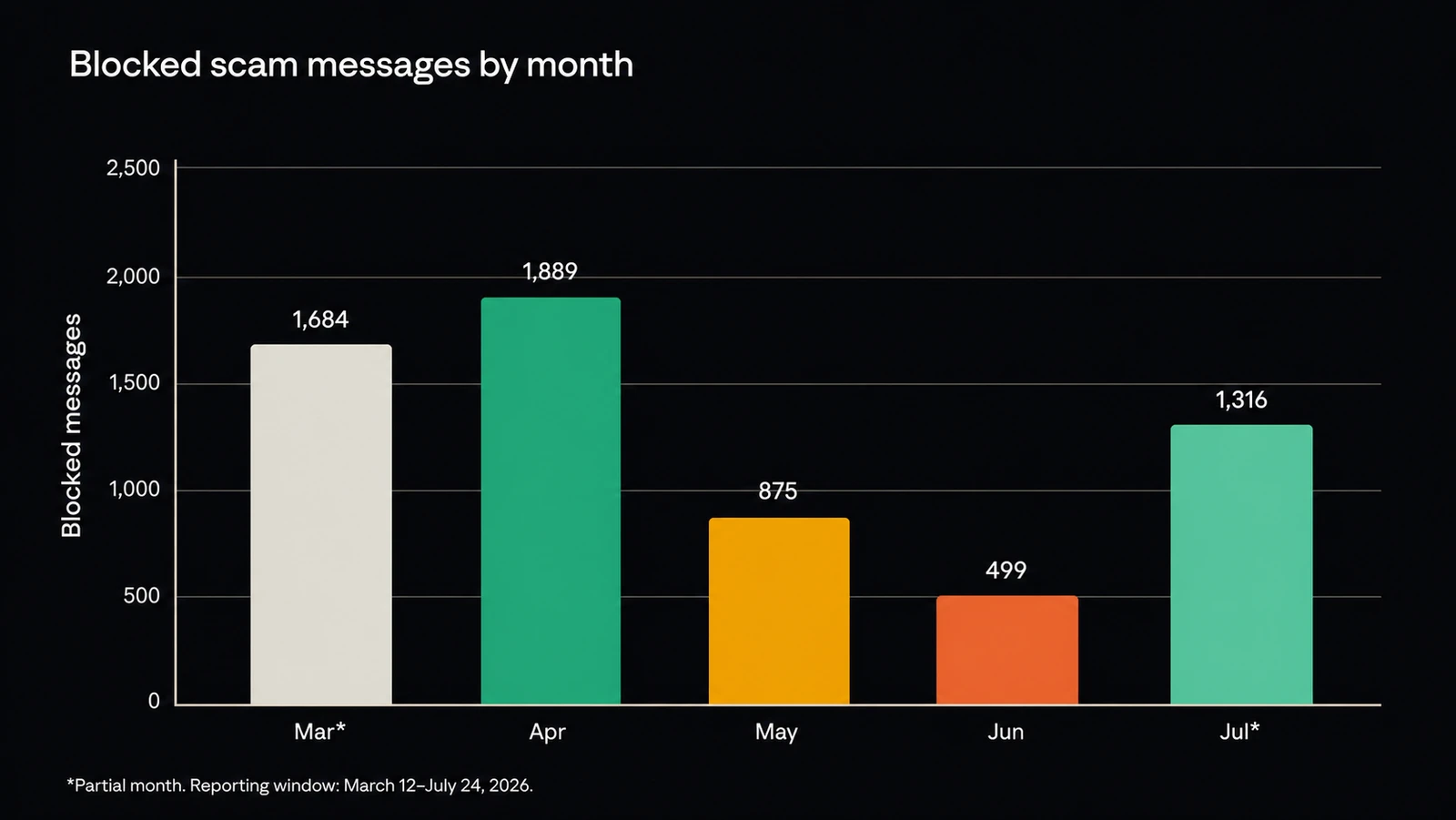
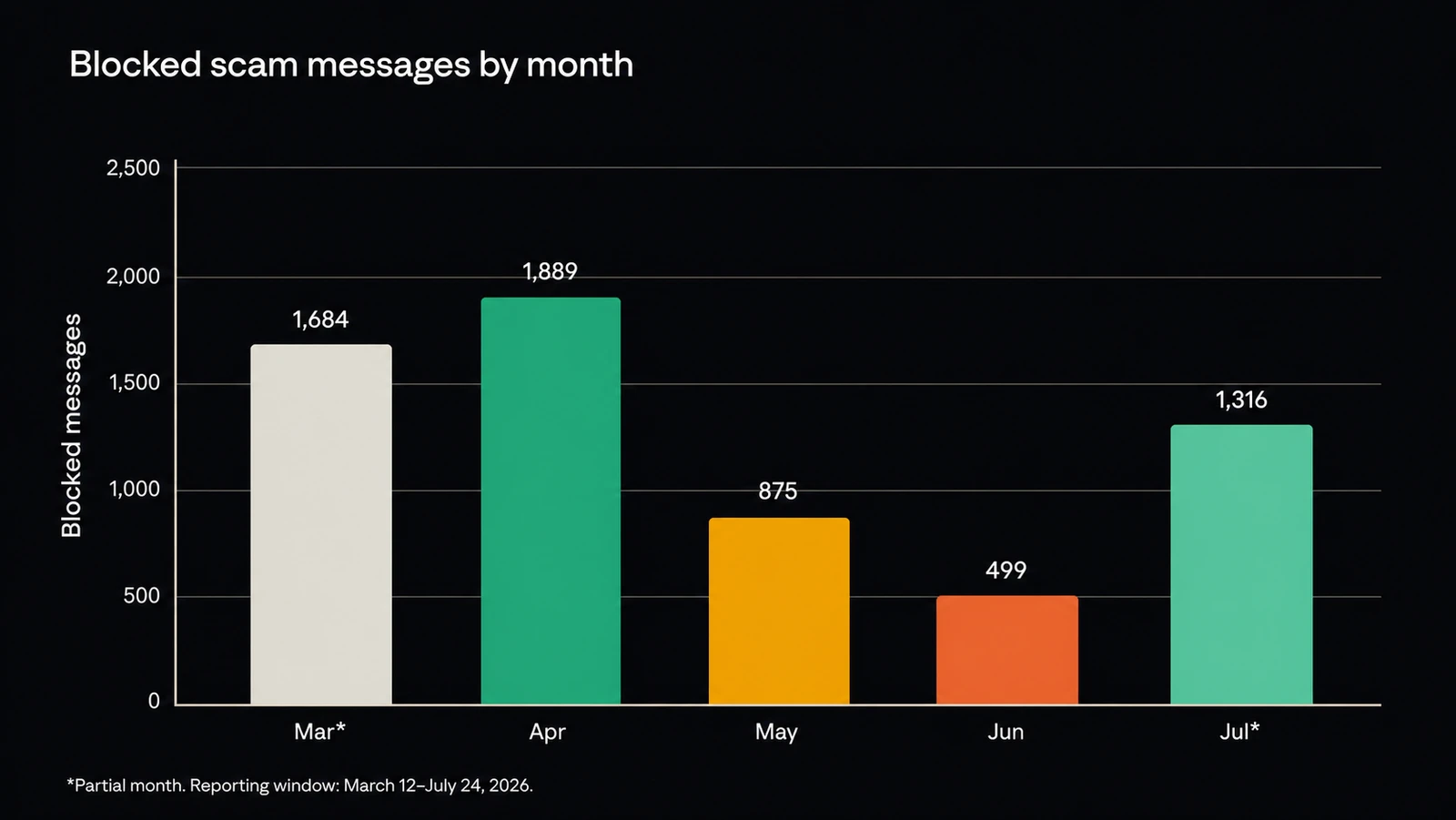
At the snapshot date, 679 accounts sat under a silent restriction: they could keep typing, but their messages reached no one. That is why this volume was largely invisible to the creators being targeted.
Payment activity
Payment fraud activity by week
Message scams had a twin at checkout: card testing, where stolen card numbers are run through a merchant to find which ones are live. In the week of May 25, Footly absorbed 5,010 payment attempts — 2.2× the median full week — including 1,065 processor declines across 670 accounts.
Successful card tokenizations spanned 606 distinct card BINs against a median week's 326. No single account made more than 27 attempts, a rotation pattern consistent with the multi-account device farms visible in the message data.
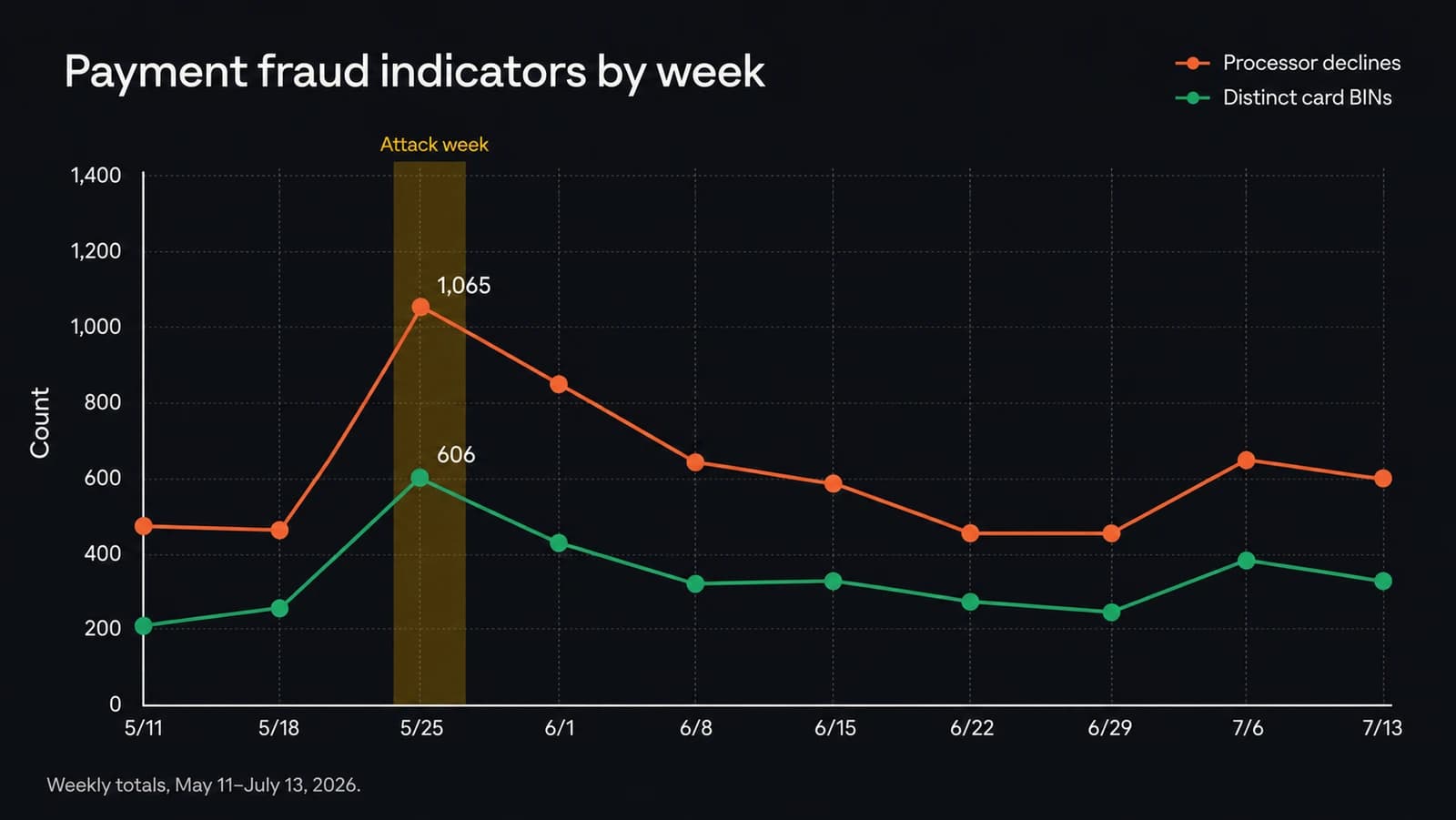
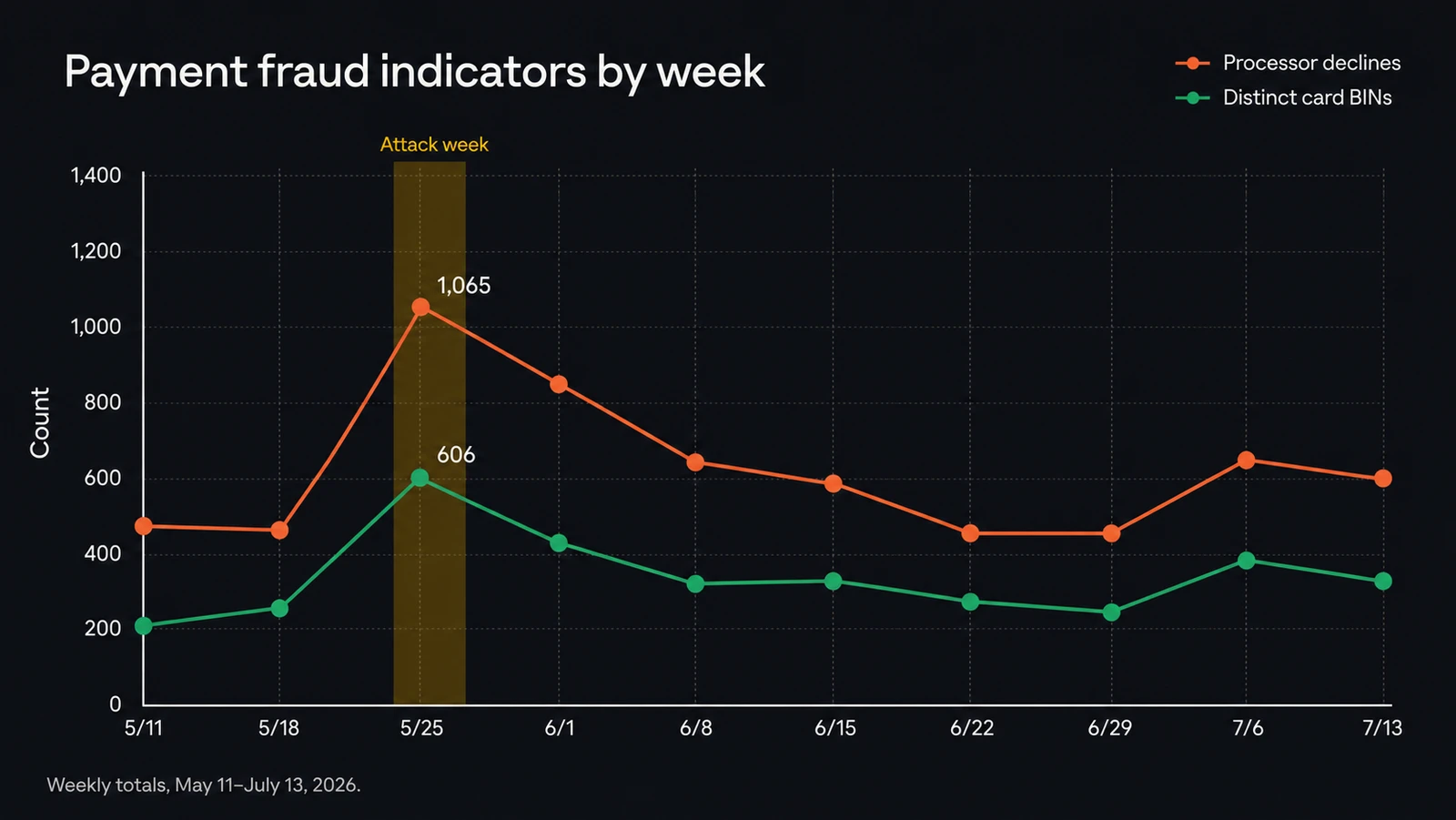
Across the payment window, 25,393 attempts produced 6,609 processor declines. Footly's carding defense hard-blocked 274 more attempts before they reached the processor, and 44 accounts are permanently barred from making payments.
Under-reporting
Creators reported almost none of it
For every scam attempt a user reported, Footly's systems blocked roughly 260. Users filed 24 scam-or-fraud reports in the same window. That is not creator negligence; most targets never saw the attempt.
The result is a visibility problem for every marketplace: public understanding is built on the small share that surfaces, while successful interception keeps the larger volume out of sight.
What to do
A data-backed seller checklist
These rules come directly from the patterns above. One red flag is enough to stop the conversation.
- Never pay anything to get paid.A release fee, verification fee, deposit, or activation charge is the classic advance-fee mechanism.
- Treat oversized unsolicited offers as scams.Real buyers browse, compare, agree on scope, and pay a market rate. They do not promise an allowance on first contact.
- Keep the conversation and payment on-platform.Moderation, order records, and checkout protection only work where the marketplace can see the activity.
- Never treat a screenshot as payment proof.Verify money inside the actual account or marketplace before sending final files.
Independent guidance
Sources and further help
Footly's figures are original platform telemetry. The general scam behaviors in this report also align with consumer-protection guidance from the U.S. Federal Trade Commission.
- FTC: What are the signs of a scam?Unexpected contact, urgency, and hard-to-reverse payments.
- FTC: What to do if you were scammedSteps to contact payment providers and protect accounts.
- Report fraud to the FTCThe official U.S. fraud reporting portal.
- Footly: Feet pic scam red flagsA practical companion guide for sellers.
Quick answers
Frequently asked questions
Are feet pic websites scams?
Legitimate feet pic marketplaces exist — the real risk is scammers targeting sellers on them, not the platforms themselves. Between March and July 2026, Footly intercepted 6,263 scam messages aimed at sellers before creators ever saw them. Selling feet pics is safer when the conversation and payment both stay on a platform that moderates messages and processes payments itself.
How common are feet pic scams?
Very common: between March and July 2026, nearly one in three direct messages sent on Footly (32.8%) was a scam attempt that Footly's systems intercepted before creators ever saw it. Those 6,263 blocked messages targeted 2,064 people, but were sent by just 126 accounts — a small number of industrialized operations, not thousands of individual scammers.
What is the most common feet pic scam?
The advance-fee scam: a fake buyer offers a large amount for a few pictures, then asks the seller to pay a small fee, deposit, or verification charge before the money can be released. In Footly's analysis, 44% of blocked messages contained advance-fee language. The promised money never existed — the fee the seller pays is the entire scam.
How do you avoid scams when selling feet pics?
Never pay a fee to receive money, treat unsolicited big-money offers as scams, and refuse to move conversations to Telegram or WhatsApp. Keep both the conversation and the payment on the marketplace, where moderation and payment protections can work.
Read this before citing
Methodology
- Snapshot
- One frozen production-database snapshot with a cutoff of. No figure mixes windows or snapshot dates.
- Data sources
- Aggregate queries over message-moderation flags, device fingerprints, payment-attempt logs, and user-filed reports.
- Windows
- Message figures cover March 12–July 24, 2026 (135 days). Payment figures cover May 11–July 24. Partial periods are labeled and excluded from weekly comparisons.
- Definitions
- A blocked scam message is a direct message sent by a flagged account and delivered to no one. Script categories overlap. A multi-account device is a fingerprint linked to two or more registered accounts. A decline is a card attempt rejected by the payment processor.
- Denominators
- 32.8% of DMs = 6,263 blocked ÷ 19,082 total DMs. Pattern shares = matches ÷ 6,263 blocked messages. Roughly 260:1 = 6,263 blocked ÷ 24 scam-or-fraud reports.
- Scope limits
- This report measures attempts blocked, not dollars lost. Nothing is annualized and no trend claim is made. All figures are aggregates; no message text or user-identifiable data appears.
- Citing this report
- Statistics and chart images may be reproduced with attribution to Footly and a link to https://www.tryfootly.com/blog/feet-pic-scam-report-2026.
Footly
Sell where scam messages get intercepted.
Keep discovery, messages, checkout, and delivery in one place — with verification and fraud controls working in the background.